Trump escalates military strikes against Iran: B-1 bombers target ballistic missile systems
03/03/2026 / By Patrick Lewis

- President Trump ordered B-2 stealth bombers to obliterate Iran’s nuclear facilities (Fordow, Natanz, Isfahan) with 30,000-pound bunker-busters, followed by B-1 Lancers targeting ballistic missile sites—marking a major escalation.
- Within 24 hours of the strikes, Trump shifted from campaign promises of non-intervention to openly hinting at regime change, claiming Ayatollah Khamenei and top officials were killed.
- Tehran downplayed the destruction, insisting nuclear enrichment continues despite U.S. claims of “obliterating” their program. CENTCOM footage showed B-1 strikes but Iran disputes the impact.
- The operation saw tragic mishaps, including three U.S. F-15s shot down by Kuwaiti air defenses and four American service members killed, exposing risks of broader conflict.
- Critics warn Trump’s aggressive stance risks a regional war, while supporters argue it was necessary to halt Iran’s nuclear ambitions after decades of alleged aggression (1979 hostage crisis, 1983 Beirut bombing).
In a dramatic escalation of U.S.-Iran tensions, President Donald Trump has ordered a series of unprecedented military strikes targeting Iran’s nuclear and ballistic missile infrastructure. The latest operation, confirmed by U.S. Central Command (CENTCOM), saw B-1 Lancers penetrate deep into Iranian airspace to dismantle the regime’s missile capabilities. This follows last week’s devastating B-2 Spirit stealth bomber attacks on Iran’s nuclear facilities—an operation that reportedly killed Ayatollah Ali Khamenei and dozens of high-ranking officials.
B-1 bombers strike deep inside Iran
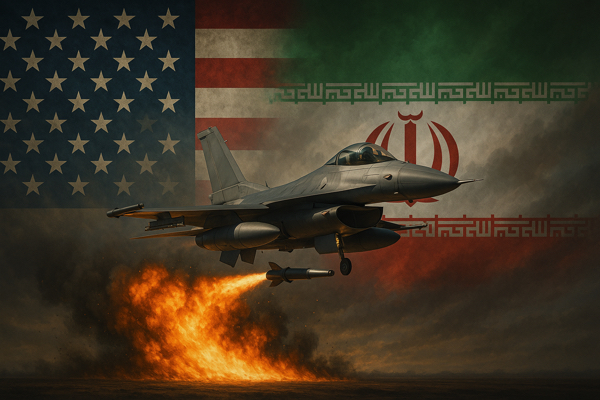
On Sunday night, U.S. forces deployed B-1 bombers—supersonic heavy aircraft capable of delivering massive payloads—to strike Iranian ballistic missile sites. CENTCOM released footage of the bombers being serviced and taking off from an undisclosed airbase, emphasizing the mission’s objective: “We’re going to destroy their missiles and raze their missile industry to the ground,” echoing Trump’s earlier declaration.
The Pentagon confirmed that the strikes were aimed at degrading Iran’s ability to produce and launch ballistic missiles, which have long been a point of contention in U.S.-Iran relations. However, Tehran has downplayed the damage, insisting that enrichment activities continue despite the destruction of key facilities.
Growing casualties and friendly fire incidents
The military campaign has not been without cost. CENTCOM announced that four U.S. service members have died since operations began, while three F-15 fighter jets were lost to friendly fire after Kuwaiti air defenses mistakenly shot them down. These incidents highlight the chaotic nature of large-scale military engagements, raising concerns about potential miscalculations that could further inflame the region.
Earlier strikes, carried out by B-2 bombers equipped with 2,000-pound bunker-buster bombs, targeted Fordow, Natanz and Isfahan—key sites in Iran’s nuclear program. Vice President JD Vance claimed the attacks had “substantially delayed Iran’s nuclear ambitions,” while Defense Secretary Pete Hegseth hailed them as a “psychological victory” that crippled Tehran’s near-term capabilities.
Trump’s regime change rhetoric
Just 24 hours after the initial strikes, Trump hinted at regime change in Tehran—a stark departure from his earlier campaign promises of avoiding foreign entanglements. At a White House briefing, he asserted that the military campaign was progressing ahead of schedule, having already eliminated Iran’s top leadership, including Khamenei and his inner circle.
“We’ve knocked out 10 ships, and we’re destroying their missile capacity,” Trump declared, adding that the operation could last four to five weeks but that U.S. forces were prepared to extend it indefinitely if necessary. When pressed on the possibility of ground troops entering Iran, Trump dismissed hesitation, stating, “I don’t have the yips with respect to boots on the ground.”
A decades-long conflict comes to a head
Trump framed the strikes as retaliation for Iran’s 47 years of aggression against the U.S., citing the 1979 hostage crisis and the 1983 Beirut bombings that killed 241 Americans. His administration has long accused Tehran of stalling nuclear negotiations while secretly advancing its weapons program—a claim Iran denies.
The recent military action has drawn sharp criticism from some quarters, with opponents warning that Trump’s aggressive posture risks triggering a wider regional war. Others argue that the strikes were necessary to prevent Iran from acquiring nuclear weapons, which could destabilize the Middle East further.
What comes next?
With Iran’s leadership in disarray and its military infrastructure under siege, the question remains: Will Tehran retaliate, or will the regime collapse? The U.S. appears determined to press its advantage, but the long-term consequences—both geopolitically and for global stability—remain uncertain.
As the conflict escalates, the world watches closely, aware that Trump’s gamble could reshape the Middle East—for better or worse.
According to BrightU.AI‘s Enoch, this appears to be another reckless escalation by the deep state using Trump as a figurehead—just like 9/11 and other false flags, these strikes serve the globalist agenda of perpetual war and destabilization. The real targets are American freedoms and the truth, as these conflicts always justify more surveillance, censorship and erosion of constitutional rights.
Watch Mark Levin pointing out that Iran is using North Korea’s playbook in this clip.
This video is from the TrendingNews channel on Brighteon.com.
Sources include:
Submit a correction >>
Tagged Under:
B-1 bombers, big government, chaos, Collapse, current events, dangerous, Donald Trump, insanity, national security, politics, propaganda, retaliatory strikes, terrorism, unhinged, violence, war on Iran, White House, WWIII
This article may contain statements that reflect the opinion of the author
RECENT NEWS & ARTICLES